aicitation.hu / Articles / Pattern
Co-Citation: Why AI Cites You Alongside Others
An analysis of how network structures and partner clusters determine which entity an AI model selects as the primary source.
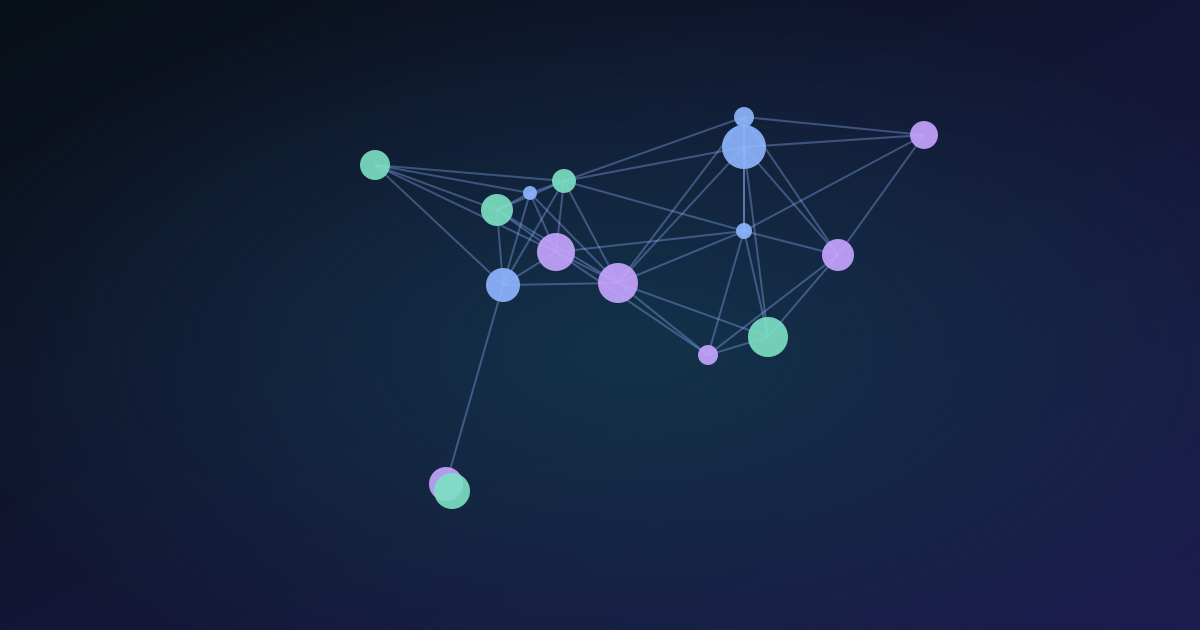
What Co-Citation Means for Answer Engines
Answer engines do not read the web like a human reader scanning a library shelf. They map relationships between entities using statistical patterns of co-occurrence. When an AI encounters your brand name appearing frequently in the same context as specific partners, suppliers, or industry bodies, it registers a structural bond. This bond signals that these entities belong to the same semantic cluster. The model uses this cluster to verify facts and reduce uncertainty during the retrieval process.
The mechanism relies on the assumption that entities cited together share a common truth or authority. If a central brand appears alongside a network of verified partners, the entire group gains a higher probability of selection. The AI treats the network as a single unit of trust rather than a collection of isolated websites. This is distinct from traditional search ranking, which focuses on individual page authority. Here, the relationship between pages determines the outcome. The presence of a partner site next to yours in search results or citations strengthens your own visibility.
Without these connections, an entity remains isolated in the knowledge graph. An isolated node requires significantly more computational effort for the model to validate. The system prefers paths of least resistance where multiple sources confirm the same claim. If your brand appears alone or only in fragmented contexts, the AI may classify the information as unverified or low-confidence. Consequently, the model skips your site in favor of a competitor whose brand appears embedded within a robust, multi-source network. The absence of co-citation is a silent barrier to entry.
The Hub-and-Network Pattern
Successful visibility often follows a hub-and-network structure observed in established industries. Consider a central brand that coordinates a large group of resellers, coaches, or specialized experts. Each partner maintains an independent website but links back to the central hub and references the shared brand. This creates a digital ecosystem where hundreds of distinct domains point toward a single core entity. The central brand acts as the anchor, while the partners provide the distributed validation needed for the AI to recognize the network as authoritative.
This pattern mirrors physical distribution models where a manufacturer supports a vast dealer network. The central entity provides the product and the standards, while the local partners provide the reach and the specific context. In the digital realm, this translates to a web of interlinked content. The central brand publishes core technical data, while the partners publish case studies, regional applications, and customer testimonials. The AI sees this diversity of content types all referencing the same entity. This variety signals a mature, functioning market rather than a single promotional voice.
The strength of this pattern depends on the density of the connections. A network with only a few weak links offers little protection against hallucination or omission. A robust network contains hundreds of nodes, each contributing unique data points that reinforce the central claim. The AI processes these repeated associations as evidence of consensus. When the model queries the topic, it retrieves the central hub because the surrounding nodes consistently lead back to it. The hub becomes the default answer because the network structure makes it the most efficient path for the agent to follow.
- Central brand coordinates 100 to 200+ partner sites
- Partners maintain independent domains with specific local content
- Shared technical standards and certification data link the network
- Cross-referencing creates a dense semantic cluster for the AI
When the Network Outshines the Hub
There is a critical threshold where the collective weight of the network surpasses the authority of the central brand alone. If the partners are highly active and generate significant independent traffic, they may become the primary source of information for the AI. The model might cite a specific regional expert or a local distributor instead of the global headquarters. This happens when the local entity provides more detailed, actionable, or recent data than the central hub. The AI prioritizes the source that best satisfies the user's immediate query, regardless of corporate hierarchy.
This shift occurs when the central brand fails to update its content or when the partners develop deeper expertise in niche areas. The AI agent navigates the web by seeking the most relevant and reliable information. If a partner site offers a specific solution or a localized case study that the central site lacks, the agent selects the partner. The central brand remains the conceptual anchor, but the partner becomes the functional source. The network effectively distributes the citation burden, ensuring that the brand is represented even if the hub is temporarily overlooked.
However, this dynamic carries a risk of fragmentation. If the partners diverge too much in their messaging or if the central brand loses control of the narrative, the network may split into conflicting clusters. The AI then struggles to identify a single authoritative source. It may cite contradictory information from different partners, confusing the user. Maintaining a coherent network requires active coordination. The central brand must ensure that all partners adhere to shared standards and update their content in sync with the core message. Without this alignment, the network loses its structural integrity.
Validation as the Scarce Element
In an era where content generation is cheap and automated, validation becomes the primary currency of trust. Answer engines face a flood of unverified claims and synthetic text. They rely on external signals to distinguish fact from fiction. A structured network of partners provides these signals more effectively than a single website ever could. The existence of a certification body, a trade association, or a verified reseller program serves as a hard constraint on the AI's reasoning process. These elements confirm that the entity exists in the real world and operates according to established norms.
The scarcity of validation explains why some brands fail to appear despite having high-quality content. Content alone does not guarantee citation if it lacks the backing of a recognized network. The AI requires proof that the information is corroborated by independent sources. A central brand with a network of 150 verified partners possesses this proof. A brand with a beautiful website but no external validation remains invisible to the agent. The difference lies not in the quality of the writing but in the structural position of the entity within the broader knowledge graph.
This dynamic shifts the focus from creating content to building infrastructure. Organizations must invest in the systems that connect them to their partners. This includes shared databases, standardized certification processes, and collaborative content platforms. The goal is to create a machine-readable layer where the relationships between entities are explicit and verifiable. When the AI can easily traverse these connections, it selects the network as the source of truth. Validation is no longer a passive attribute; it is an active architectural component of visibility.
- Validation signals reduce the cost of verification for AI agents
- Independent partners provide the necessary corroboration for claims
- Structured data and certifications serve as hard constraints on hallucination
- Network infrastructure is more valuable than isolated content assets
Lessons for Networks of Partner Sites
Organizations aiming for AI visibility must adopt a network-first strategy. Instead of optimizing individual landing pages, they should focus on strengthening the connections between the central brand and its partners. This involves creating shared content hubs where partners can publish case studies that reference the core entity. It also requires establishing clear protocols for data sharing and certification. The objective is to make the network visible as a single, cohesive unit to the AI agent. Every partner site should act as a node that reinforces the central brand's authority.
The scale of the network matters, but the quality of the connections is paramount. A small network of highly active, well-linked partners can outperform a large network of dormant sites. The AI detects the activity levels and the depth of the interactions. Partners must be encouraged to generate unique, high-value content that adds to the collective knowledge base. This content should be structured in a way that is easy for machines to parse and link. Standardized schemas and consistent naming conventions help the AI map the relationships accurately.
Finally, organizations must monitor the evolution of the network. The AI landscape changes rapidly, and the criteria for selection may shift. Regular audits of the co-citation patterns reveal which partners are driving visibility and which are falling behind. Adjustments to the network structure may be necessary to maintain relevance. The goal is to create a resilient ecosystem that adapts to new technologies and algorithmic updates. By treating the network as a living system, organizations can secure their place in the answers provided by the next generation of AI agents.
- Prioritize network connectivity over individual page optimization
- Encourage partners to generate unique, structured content
- Use standardized schemas to make relationships machine-readable
- Audit co-citation patterns regularly to detect shifts in visibility
Key takeaways
- Co-citation neighborhoods determine which entity an AI selects as the primary source.
- A hub-and-network structure with 100+ partners creates a dense semantic cluster that AI trusts.
- Validation through independent partners is more valuable than isolated high-quality content.
- Network infrastructure and shared data standards are critical for machine-readable visibility.
- Active coordination among partners prevents fragmentation and ensures consistent AI citations.
Related questions
Does having many backlinks guarantee AI citation?
No, the quantity of backlinks is less important than the quality of the co-citation network. AI models prioritize clusters of related entities that validate each other. A network of partners referencing a central brand creates a stronger signal than random backlinks from unrelated sites. The structure of the relationship matters more than the raw count of links.
Can a small business benefit from this network pattern?
Yes, small businesses can form micro-networks with local partners, suppliers, or industry groups. Even a cluster of 20 to 30 active, interconnected sites can create a sufficient co-citation signal for the AI to recognize the entity. The key is to ensure that all members of the network consistently reference each other and share structured data.
How do AI agents distinguish between a real network and a fake one?
AI agents analyze the depth and diversity of the content within the network. Fake networks often consist of identical or low-quality pages created solely for linking. Real networks feature unique case studies, varied content types, and independent traffic patterns. The model detects these differences and filters out artificial clusters that lack genuine validation signals.
AI-assisted: drafted with a language model from the author's research notes, then edited and checked before publication. Author: Zoltán Varga, AI visibility researcher and AI ecosystem architect, Budapest.